Procedural illustration of a rendered hand, its hand-pose skeleton, per-finger contact force and a 2-D gaze point on one clock; not a recording of a person. Raw signal never leaves the device.
Cr4dle builds embodied intelligence that learns the physical world from humans — the world model, the human and physical model, and the agents that act in bodies — until an agent in a body is indistinguishable from a person at physical work and is certified to work beside people.
We are researching physical-interaction models: how actions change the motion of objects. Our plan starts small with free, open tools, permitted public data and our own tests. We learn from potential users; useful transfer to real robots remains unproven.
Humans as
the instrument.
Humans as the instrument: consented recordings of how people look, grip and act during physical work, planned for sale as force and gaze labels paired with video for robot training data. Revenue from this rung is intended to fund later stages; each remains a dated bet with a kill criterion.
Future human recordings could help where public data falls short. The planned capture path pairs a bought sEMG/IMU band with a head camera, adding eye-tracking glasses when gaze matters. Force estimates still need calibration and comparison on people held out of training. This path has its own evidence gates; it is not a prerequisite for a small model experiment.
- Head cameraVideo, redacted on deviceRedacted, under consent
- Head cameraHand pose; head pose plannedHand pose from the frame before redaction
- Lens glassesGaze targetFeatures only
- sEMG/IMU bandContact force, calibratedFeatures only
- sEMG/IMU bandDemonstrator stateFeatures only
- Contact forceper finger, calibrated in 15 minutes, reported with its held-out-user error
- Gaze targetwhere the wearer looked: a point on the scene camera, on the video clock; never an eye image
- Hand pose21 keypoints per hand, estimated on the device from the camera frame before redaction; only the coordinates leave, beside the redacted video, and the frame itself never leaves
- Head poseplanned: where the head pointed in the scene frame, from the camera and the IMU; not where the eyes looked
- Demonstrator statefatigue and safety-relevant physical states, one value per frame, never a mental state
Bought sensors come before custom hardware; Ember is a band development programme. Its build gate is Q2 2027, and the build needs three paid collections on bought bands, so it waits on the decision that replaces ADR-0136. Nothing is offered for sale today. Share a physical task or research question with us.
A LeRobot-format episode
with a dataset card.
The planned format pairs hand and head pose, gaze target, per-finger contact force, the sEMG feature vector behind it and demonstrator state with redacted video (monochrome today: faces and certified bystanders blurred, audio never captured). The synthetic demo shows the episode and its dataset card. The card prints five facts as numbers or as not run with a dated gate.
The episode layout, the card and the licence shape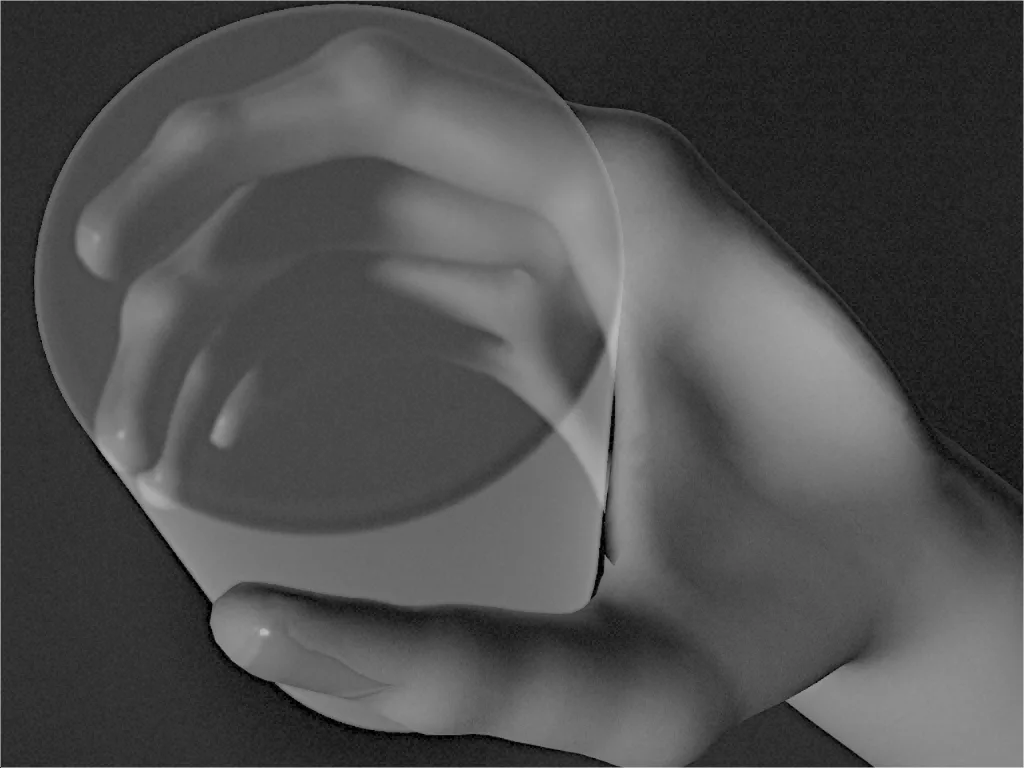
Procedural illustration of one episode’s frames and columns on one clock; not a recording.
Sync error
p50, p95 and max in microseconds, measured from the LED-flash residuals on every recording.
Participant count
with the episode and frame counts; pseudonyms only.
Held-out-user force error
the cross-user (LOSO) number against a vision baseline, or not run with the gate by which it is due.
Discard counts
by reason: sync skew, missing consent, redaction failed, low quality, calibration invalid.
What was redacted
the policy, the redactor's code hash, faces, bystanders, audio and frames dropped.
Dated gates.
Published either way.
A question, a comparison and a stopping rule come before an experiment. We test on data held apart from training and report failures as well as gains. Human-derived labels also need tests on people held out of training. A synthetic or simulated number is labelled as such and does not establish real-robot performance.
Page built (UTC)
date passed · no result recorded in the registry
The kit on a person with its sync error printed; at least ten hours from at least five participants, with a dataset card; the cross-user force model against a learned vision baseline.
Registry text: kit on a person with sync error printed; >=10 hours from >=5 participants with a dataset card; cross-user EMG->force model at <= 1.5 N pooled after the 15-minute calibration against a learned RGB vision baseline (LOSO); zero-calibration twin printed
date passed · no result recorded in the registry
One signed or paid team, suspended by ADR-0136.
Registry text: one signed or paid team — suspended by ADR-0136
The force-aware versus motion-only ablation on by-hand episodes, at least forty trials per condition, published either way.
Registry text: force-aware vs motion-only ablation on by-hand episodes, >= 40 trials per condition, one interleaved sealed schedule, hidden-condition scoring; PASS iff the one-sided 95% Newcombe lower bound is above zero and the observed gain is >= 15 points, a pre-registered minimum observed effect, not a certified margin; else the channel thesis is wrong; published either way (ADR-0053)
Three paid collections (the quarter rendered as its last day), suspended by ADR-0136.
Registry text: three paid collections, >= 100 hours, >= $50k cumulative (Q1 2027, rendered as the quarter's last day) — suspended by ADR-0136
The gates are the registry rows of Instrumented human demonstration (status: gated; attested by: pending-founder). A gate that is missed is published as missed. ADR-0136 suspends the paid gates of this phase. The research gates stay in force.
Three pillars.
Begin with testable models.
Stated as the company vision states them. Each pillar is held in the repository as a dated bet with a kill criterion; the ceiling under each is where the evidence stands, not where the story ends.
The end-state is a test, not a claim: the human-parity trials are a protocol — a published task list, blinded judges, published either way. A benchmark result is about behaviour, never about inner states, and it is scored in simulation, labelled so, until a real body runs it. In the repository the trials are a protocol block and a dated bet with a kill criterion.
World model
Research into physically grounded and human-conditioned world models, used first as evaluators and data engines; persistent-state and physical-correctness evaluation. Proposed Cr4dle models would condition on consented human-side force whose labels carry a held-out-user error; physical task benefit remains unproven.
- Home in the repository
research/,benchmarks/, laterplatform/models/- The bet
- Held as
wm-human-conditioned-latentinhorizons/bets.yaml: a dated bet with a kill criterion. - Honest ceiling today
- Persistent state and physical correctness need their own evaluation; visual realism does not establish either. Research already conditions video models on human force and muscle signals. Cr4dle's proposed evaluators and data engines must establish physical task benefit; its research starts with adapters and evaluators on open weights, under bets with kill dates.
- Window
- Research bets now; a pretraining run only behind licence revenue or a funded compute line (ROADMAP Phase 4).
Physical / human model
The Cr4dle Human Model (what a person reaches for, when, how hard; behaviour near machines) and the contact model of the hand; cross-user calibration as the hard problem.
- Home in the repository
platform/decoders/human-model,sdk/python- The bet
- Held as
human-model-paired-corpusinhorizons/bets.yaml: a dated bet with a kill criterion. - Honest ceiling today
- Camera force estimates and datasets with human force and muscle signals exist. For Cr4dle, useful transfer remains unproven: its labels must improve real-robot tasks and its paired corpus must support prediction on people held out of training. The model is not trained before licence revenue; the SDK is an interface and a mock.
- Window
- Phase 2, 2028 → 2030 (ROADMAP): 1,000 hours with channels across ≥50 participants and ≥3 customers (Q4 2027) gate it.
Robots
The embodied agent (planner, policy, dialogue, memory) behind the SDK; the human-parity trials as a public benchmark; bodies bought (none is bought today: the SO-101 rig is a candidate purchase in the equipment registry; humanoid platforms by gate) plus an own-platform track that is a simulation twin until its build ADR.
- Home in the repository
- agent and policies:
research/now,platform/models/later (sdk/*is the interface and mock, ADR-0105);benchmarks/;hardware/platforms/ - The bet
- Held as
embodied-agent-human-parityinhorizons/bets.yaml: a dated bet with a kill criterion. - Honest ceiling today
- No such agent exists. Nothing in the human-reading layer is certifiable as a safety function today; bodies are bought, the own-platform track is a simulation twin until its build ADR, and the human-parity trials are scored in simulation first, labelled so and never release-eligible.
- Window
- Phases 4 and 5 (ROADMAP): gate-ordered, no year stated; the dated stages of the embodied-agent bet are the clocks, and a real body must run the benchmark before a score counts.
Bring a task.
Define the proof.
Share a physical task, a failure that matters or a research question. We want to learn what a useful model would need to predict and how you would judge it. Robot access is not needed for that conversation. Model results and feedback will guide the next experiment and any future offering.
Video shows the motion.
We plan to measure the contact.
Egocentric video of hands is plentiful. It does not show how hard a finger presses. We plan to pair bare-hand video with calibrated contact-force labels, and to print the error of each label on its card.
Research and synthetic demoNothing is offered for sale. No hours are recorded on real sensors yet. The demo uses synthetic data.
Calibrated labels
Each contact-force label is to ship with its error on people held out of training, measured against a fingertip-force rig, and with the measured sync error of its episode.
Planned · the synthetic demo card shows the fields
Bare-hand capture
An sEMG/IMU band is to keep the finger pads bare. A fingernail force module can join a later revision of Ember if its own bet passes. Nothing covers the grasp, and the video shows bare hands.
In design · the nail module is not built
Contact Lift
A research model that is to estimate per-finger contact from bare-hand video alone. Paired kit episodes train it. The kit is to be the calibration source, and the model the multiplier.
Research bet · dated kill criterion
Consent lineage
Consent is checked at capture and again at export, with revocation, on each episode. Raw sEMG stays on the device; only features leave it.
Reference code and tests
A proposed skill library.
For people and humanoids.
One skill corpus, two kinds of learners. Experts are to record calibrated skill capsules. People are to practise against them, and humanoids are to learn from the same capsules in simulation.
Proposal and researchNo capsule is recorded and nothing is offered for sale. Each part is a proposed bet with a dated kill criterion. The wording is for sport and skill practice only, with no health claim.
Experts are to record
An expert is to record a skill capsule with the bare-hand kit: motion, contact force, timing and gaze, with consent and provenance. The expert is to own the capsule, set its licence terms and earn a royalty share.
Proposal · no capsule recorded
People are to practise
A learner is to buy a capsule once and practise with the band and a phone camera. The system is to align each attempt with the expert by phase and give cues on screen and by sound.
Proposal · price not announced
Humanoids are to learn
The same capsules are to be retargeted to humanoid bodies in simulation first, and scored there, labelled as simulation, before any real body runs them.
Research · simulation only